

November 2026
Dragons—Fiction or Forgotten Friends?
最近のトピック
Dragons—Fiction or Forgotten Friends?
September & October 2026
Mystical Beings of Earth and Beyond
2026年7月
レイライン、立石群、記念碑
2026年5月6月
母なる地球とわたしたちのつながり
2026年 3月4月
ポータル
2026年2月
タイムライン
2025年12月 2026年1月
人生の課題を乗り越えるためのスピリチュアルなアプローチ
2025年11月
意識と意図
2025年10月
ゼロ・ポイントとバランス
2025年9月
真の自己、エゴと自己認識
2025年7月
分断を乗り越えて
2025年6月
主権とマトリックスからの脱出
“基本のスピリチュアル・トピックを繰り返すことは非常に興味深いです。最初のラウンド以来、人々がどれだけ進化したかが非常に明確になります。今回は、驚くべき脆さ、内省、深さが表れています。脆さと内省をさらに強化するために、人々が希望する場合に自分の人生の物語を語る機会を提供するセクションを作りました。彼らはどのようにここにたどり着いたのか?どんな課題があったのか?そして、どのように成長したのか?これにより、お互いをよりよく知り、理解し、思いやりを示す機会が得られます。皆それを愛しています。2人ずつ行い、実際に行動を示す良い方法のようです。”
“私たちのMST(マンスリー・スピリチュアル・トピック)は、人々が本当の自分に出会い、アイデンティティの仮面を剥がす手助けをします。そうすることで、本物の自分が輝くことができますが、それには勇気と努力が必要です。”
“共感と慈悲…このテーマがCCで探求されたのは二回目になります。自分自身、チーム、そして全体のメンバーシップの成長を見ることができ、とても感動しました。私たちが行っているこの仕事が美しく、重要であることを再確認させてくれました。”
“CC に感謝します... 平和を得るためには、時々こうした幻想から距離を置かなければなりません。”
“これらは、社会的な意識の世界として、自分を修正すべき部分として私に届きます。これらのコースを準備してくれてありがとう。”
“これらの話題は、外ではなく内に集中するのを助けてくれます。それは、私たちの周りで起きている混乱からの前向きな気晴らしになります。”
“私は今月のスピリチュアル・トピックが本当に大好きです。私を助けてくれますし、本当に私を癒してくれます。”
“基本のスピリチュアルな話題は、私たちの新しいメンバーにとって非常に心に響きます。彼らの多くは、目覚めのスピリチュアルな旅を始めています...(ベッキーとクリスに感謝します)...この目覚めの興奮は、見ていてとても素晴らしいです。”
“私達は皆、それぞれの独自の旅をしています。あなたは高度に進んでいて、他の人が出来ない進んだ道を歩んでいるかも知れません。でも、他の人があなたに教えたり、共有したりしてくれるところがあるかも知れません。でもそれは素晴らしい事です。他の誰かより劣っているなどと思わないでください。”
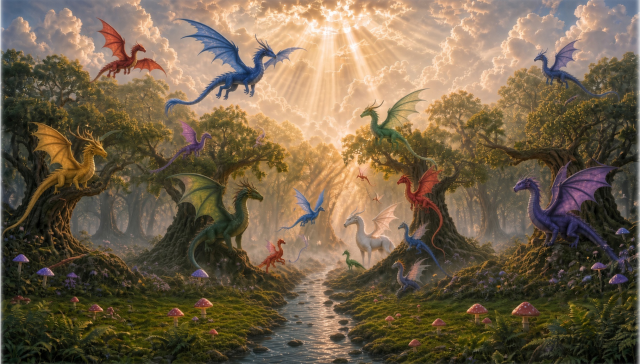
Let’s face it: Dragons have had a bad rap. In movies and books, they are typically the ‘bad guys’—fire-breathing, fierce, annihilating, and causing chaos and ruin. Even many children’s books portray dragons as flying in and slaying kingdoms. Unicorns have been written off as fictional creatures, often with a condescending statement like, “Do you think life is all sunshine, rainbows, and unicorns?”
It is socially acceptable for children to believe in dragons, fairies, unicorns, and other ‘mythical’ creatures; however, not so for adults. These beings have been relegated to myths and children’s stories where ‘imagination’ is allowed.
And yet, there are adults who hold on to their imagination, draw upon inspiration, and have a broader faith in both the seen and unseen.
“I believe in everything until it’s disproved. So I believe in fairies, the myths, dragons. It all exists, even if it’s in your mind. Who’s to say that dreams and nightmares aren’t as real as the here and now?”—John Lennon
“For fantasy is true, of course. It isn’t factual, but it is true. Children know that. Adults know it too, and that is precisely why many of them are afraid of fantasy. They know that its truth challenges, even threatens, all that is false, all that is phony, unnecessary, and trivial in the life they have let themselves be forced into living. They are afraid of dragons, because they are afraid of freedom.”—Ursula K. Le Guin, American speculative fiction author
There are many other ‘mythical’ beings, such as Mermaids, Griffins (a hybrid of a lion and an eagle), Phoenixes, Sphinxes, Chimeras, Loch Ness Monsters, and many more. There are also more human-like beings such as Fairies, Pixies, Elves, Gnomes, Leprechauns, Giants, Sasquatch, Centaurs (half-human, half-horse), Minotaurs (half-man, half-bull), Fauns (half-man, half-goat), and others that we reviewed in the last Monthly Spiritual Topic. For the rest of this topic, we will focus primarily on dragons.
全文および追加のリソースは、CCメンバー専用のプライベートなソーシャル接続プラットフォームであるMighty Networksでご利用いただけます。
マンスリー・スピリチュアル・トピック(MST)とは何でしょう?
私たちは毎月新しいスピリチュアルなテーマを作成しています。コーディネーターはこれらのテーマを使用してディスカッションを促進し、メンバーが実生活の状況について話し合い、洞察やアイデア、戦略を共有する機会を提供します。スピリチュアルなテーマは、CCの内部ソーシャルコネクティングプラットフォームに掲載され、世界中のメンバーが会話に参加し、個人的な考えを共有します。これらのテーマは、自己認識やスピリチュアルな成長に関する議論のポイントを提供し、私たち一人ひとりが自分自身の最良のバージョンになるための支援と力を与えることを目的としています。
MSTの狙い
私たちは皆、成長し、人生により大きな意味、目的、喜びを見出すためのユニークな旅を続けています。そのためには、自分の内面を深く見つめることが必要です。13 世紀のペルシャの詩人、ルーミーはこう述べています。「宇宙のすべてはあなたの中にあります。すべてを自分自身に求めなさい。」
マンスリー・スピリチュアル・トピックはメンバーを助ける目的で設計されています:
- 自分自身をよりよく知る(自己実現)
- 内なる叡智につながる
- 意識の焦点と意図を高める
- ハート中心の空間で生きる
- 慈悲の気持ちを表し、すべての人に奉仕する
- 高次の自己/神聖な自己と一致する
- 自分自身と集団にポジティブな変化をもたらす
MSTの目的
月例スピリチュアル トピック プロセスは、次の 2 つの主な目的を果たすために作成されました。 メンバーにスピリチュアルな対話と教育を提供し、メンバーの議論を活発にするためにコーディネーターに適切なトピック資料を提供すること。 これにより、コーディネーターはトピックを検索したり、プレゼンテーションする資料を探したりする必要がなくなり、時間を節約できます。 また、コーディネーターにファシリテーション スキルをさらに向上させる機会も与えられます。