November 2026
Dragons—Fiction or Forgotten Friends?
Temi recenti
Dragons—Fiction or Forgotten Friends?
Settembre & Ottobre 2026
Esseri mistici della Terra e dell’aldilà
Luglio 2026
Linee energetiche, menhir e monumenti
Maggio & Giugno 2026
Il nostro legame con Madre Terra
Marzo e Aprile 2026
Portali
Febbraio 2026
Linee Temporali
Dicembre 2025 e Gennaio 2026
Un approccio spirituale alla gestione delle sfide della vita
Novembre 2025
Attenzione ed intenzione
Ottobre 2025
Punto zero ed equilibrio
Settembre 2025
Il sé autentico, l'ego e l'identità
Luglio 2025
Andare oltre la divisione
Giugno 2025
Sovranità e uscita dalla Matrix
“Grazie al Cielo per CC... A volte devo allontanarmi da queste illusioni per vedere la pace.”
“Ognuno di noi sta compiendo un percorso unico. Tutti voi sarete molto evoluti e avanzati in modi che altre persone non sono, e avrete aree di apprendimento che altre persone possono insegnarvi o condividere con voi. E credo che questo sia meraviglioso. Non sentitevi mai inferiori a nessun altro.”
“Sono arrivati a me, essendo nel mondo della coscienza sociale e autocorreggendo la mia parte in esso. Grazie per aver reso possibile questi corsi.”
“Empatia e compassione... è la seconda volta che questo tema viene esplorato in CC. Vedere la crescita in me stesso, nel team e nei membri è stato molto stimolante e ha confermato che questo è un percorso bello e importante che stiamo tutti facendo.”
“Mi piace molto il tema spirituale di questo mese. Mi sta aiutando molto. Mi sta aiutando veramente a guarire.”
“I temi spirituali fondamentali sono così intensi per i nostri nuovi membri, molti dei quali stanno iniziando il loro cammino spirituale di risveglio (grazie Becky e Chris)... L'eccitazione di questo risveglio è così meravigliosa da vedere.”
“Questi temi mi aiutano a concentrarmi sull'interno piuttosto che sull'esterno. È una distrazione positiva dal caos che ci circonda.”
“I nostri TSM (Temi spirituali mensili) tolgono le maschere che le persone hanno per arrivare alla loro vera identità e per trovarsi faccia a faccia con ciò che sono: l'autenticità può allora risplendere, ma richiede coraggio e duro lavoro.”
“È stato così interessante ripetere i temi spirituali di base. Diventa molto chiaro quanto le persone si siano evolute rispetto al primo ciclo. Questa volta è emersa un'incredibile vulnerabilità, riflessione e profondità. Per rafforzare ulteriormente la vulnerabilità e la riflessione, abbiamo creato una sezione in cui le persone hanno la possibilità di raccontare la loro storia di vita, se lo desiderano. Come sono arrivati qui? Quali sono state le sfide? E come sono cresciuti? Questo ci dà l'opportunità di conoscerci meglio, di capire meglio e di mostrare compassione. Tutti lo adorano. Ne facciamo due alla volta; mi sembra un buon modo per fare un discorso concreto.”
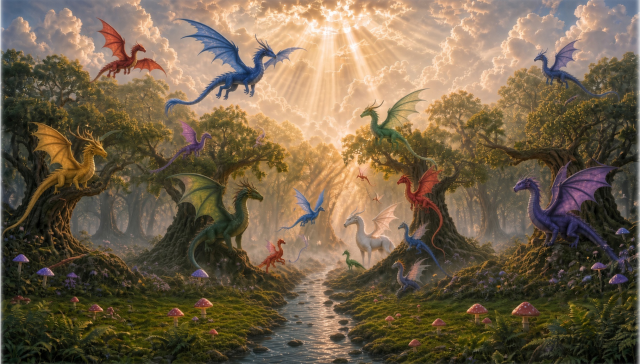
Let’s face it: Dragons have had a bad rap. In movies and books, they are typically the ‘bad guys’—fire-breathing, fierce, annihilating, and causing chaos and ruin. Even many children’s books portray dragons as flying in and slaying kingdoms. Unicorns have been written off as fictional creatures, often with a condescending statement like, “Do you think life is all sunshine, rainbows, and unicorns?”
It is socially acceptable for children to believe in dragons, fairies, unicorns, and other ‘mythical’ creatures; however, not so for adults. These beings have been relegated to myths and children’s stories where ‘imagination’ is allowed.
And yet, there are adults who hold on to their imagination, draw upon inspiration, and have a broader faith in both the seen and unseen.
“I believe in everything until it’s disproved. So I believe in fairies, the myths, dragons. It all exists, even if it’s in your mind. Who’s to say that dreams and nightmares aren’t as real as the here and now?”—John Lennon
“For fantasy is true, of course. It isn’t factual, but it is true. Children know that. Adults know it too, and that is precisely why many of them are afraid of fantasy. They know that its truth challenges, even threatens, all that is false, all that is phony, unnecessary, and trivial in the life they have let themselves be forced into living. They are afraid of dragons, because they are afraid of freedom.”—Ursula K. Le Guin, American speculative fiction author
There are many other ‘mythical’ beings, such as Mermaids, Griffins (a hybrid of a lion and an eagle), Phoenixes, Sphinxes, Chimeras, Loch Ness Monsters, and many more. There are also more human-like beings such as Fairies, Pixies, Elves, Gnomes, Leprechauns, Giants, Sasquatch, Centaurs (half-human, half-horse), Minotaurs (half-man, half-bull), Fauns (half-man, half-goat), and others that we reviewed in the last Monthly Spiritual Topic. For the rest of this topic, we will focus primarily on dragons.
Il testo completo e altre risorse sono disponibili per i membri di CC su Mighty Networks, la piattaforma privata di connessione sociale di CC.
Cosa sono i temi spirituali mensili (TSM)?
Ogni mese creiamo nuovi temi spirituali. I coordinatori usano questi argomenti per facilitare le discussioni e dare ai membri l'opportunità di parlare di situazioni di vita reale e di condividere visione, idee e strategie. I temi spirituali vengono pubblicati sulla piattaforma interna di connessione sociale di CC dove i membri di tutto il mondo si impegnano in conversazioni e condividono pensieri personali. Questi temi sono stati pensati per fornire spunti di discussione sulla consapevolezza di sé e sullo sviluppo spirituale, per consentire e dare a ciascuno di noi la possibilità di diventare la versione migliore di ciò che siamo!
Propositi dei TSM
Siamo tutti impegnati in un viaggio unico per crescere e trovare un significato, uno scopo e una gioia più grandi nella vita. Per fare questo è necessario concentrarsi profondamente sul proprio Io interiore. Come affermava il poeta persiano del XIII secolo Rumi, "Tutto ciò che c'è nell'Universo è dentro di te. Chiedi tutto a te stesso".
A tal fine, i temi spirituali mensili sono pensati per aiutare i membri:
- Conoscere meglio se stessi (autorealizzazione)
- Connettersi con la propria saggezza interiore
- Sviluppare una consapevole focalizzazione e ed intenzione
- Vivere da uno spazio centrato sul cuore
- Esprimere compassione e mettersi al servizio di tutti
- Allinearsi con il proprio Sé superiore/divino
- Manifestare un cambiamento positivo per se stessi e per la collettività
Obiettivi dei TSM
Il processo dei Temi spirituali mensili è stato creato per raggiungere due obiettivi principali: Offrire ai membri un dialogo e un'educazione spirituale e fornire ai Coordinatori materiale pertinente per facilitare discussioni coinvolgenti tra i membri. Ciò consente di risparmiare tempo ai Coordinatori, che non devono più cercare argomenti e trovare materiale da presentare. Inoltre, i Coordinatori hanno l'opportunità di sviluppare ulteriormente le loro capacità di facilitazione.