
November 2026
Dragons—Fiction or Forgotten Friends?
Najnowsze tematy
Dragons—Fiction or Forgotten Friends?
September & October 2026
Mystical Beings of Earth and Beyond
July 2026
Ley Lines, Standing Stones, & Monuments
Maj i Czerwiec 2026
Nasze połączenie z Matką Ziemią
Marzec i Kwiecień 2026
Portale
Luty 2026
Linie czasu
Grudzień i Styczeń 2026
Duchowe podejście do radzenia sobie z wyzwaniami życiowymi
Listopad 2025 r.
Uwaga i intencja.
Październik 2025 r.
Punkt zerowy i równowaga
Wrzesień 2025 r.
Autentyczne ja, ego i tożsamość
Lipiec 2025 r.
Wychodzenie poza podziały
Czerwiec 2025 r.
Suwerenność i wychodzenie z matrixa
“Odbieram to jako bycie w świecie świadomości społecznej i samokorygowanie mojej w nim roli. Dziękuję za udostępnienie tych kursów.”
“Tematy te pomagają mi skupić się na sprawach wewnętrznych, a nie zewnętrznych. To pozytywne odwrócenie uwagi od chaosu, który dzieje się wokół nas.”
“Dzięki Niebiosom za CC... czasami muszę zdystansować się od tych iluzji, aby zobaczyć spokój.”
“Empatia i współczucie... to już drugi raz, kiedy ten temat został poruszony w CC. Obserwowanie rozwoju mojego, zespołu i członków jako całości było bardzo inspirujące i potwierdziło, że jest to piękna i ważna praca, którą wszyscy wykonujemy.”
“Bardzo podoba mi się duchowy temat tego miesiąca. Bardzo mi pomaga. Naprawdę pomaga mi w leczeniu.”
“Fundamentalne tematy duchowe są tak poruszające dla naszych nowych członków, z których wielu rozpoczyna swoją duchową podróż przebudzenia... (Dziękuję Becky i Chris).... Ekscytacja tym przebudzeniem jest tak cudowna.”
“Powtórzenie podstawowych tematów duchowych było bardzo interesujące. Stało się jasne, jak bardzo ludzie ewoluowali od czasu pierwszej rundy. Tym razem pojawiła się niesamowita wrażliwość, refleksja i głębia. Aby jeszcze bardziej wzmocnić wrażliwość i refleksję, stworzyliśmy sekcję, w której ludzie mają możliwość opowiedzenia historii swojego życia, jeśli chcą. Jak się tu znaleźli? Jakie były wyzwania? I jak się rozwinęli? Daje nam to możliwość lepszego poznania się, lepszego zrozumienia i okazania współczucia. Wszyscy to uwielbiają. Robimy 2 na raz; wydaje się, że to dobry sposób na prowadzenie rozmowy.”
“Każdy z nas jest na swojej własnej, unikalnej drodze. Wszyscy będziemy bardzo rozwinięci i zaawansowani w sposób, w porównaniu do innych, i będziemy mieli lekcje do nauki, których inni ludzie mogą nam udzielić lub podzielić się z nami wiedzą. Myślę, że to wspaniałe. Nigdy nie czuj się gorszy od innych.”
“Nasze MST (Miesięczne Tematy Duchowe) zdzierają maski, które ludzie mają, aby dotrzeć do swojej prawdziwej tożsamości i stanąć twarzą w twarz z tym, kim są - autentyczność może wtedy zabłysnąć, ale wymaga to odwagi i ciężkiej pracy.”
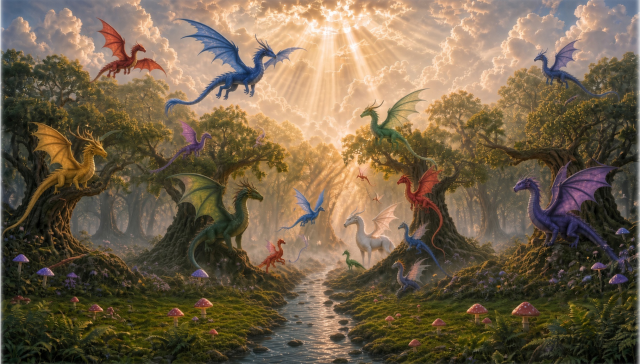
Let’s face it: Dragons have had a bad rap. In movies and books, they are typically the ‘bad guys’—fire-breathing, fierce, annihilating, and causing chaos and ruin. Even many children’s books portray dragons as flying in and slaying kingdoms. Unicorns have been written off as fictional creatures, often with a condescending statement like, “Do you think life is all sunshine, rainbows, and unicorns?”
It is socially acceptable for children to believe in dragons, fairies, unicorns, and other ‘mythical’ creatures; however, not so for adults. These beings have been relegated to myths and children’s stories where ‘imagination’ is allowed.
And yet, there are adults who hold on to their imagination, draw upon inspiration, and have a broader faith in both the seen and unseen.
“I believe in everything until it’s disproved. So I believe in fairies, the myths, dragons. It all exists, even if it’s in your mind. Who’s to say that dreams and nightmares aren’t as real as the here and now?”—John Lennon
“For fantasy is true, of course. It isn’t factual, but it is true. Children know that. Adults know it too, and that is precisely why many of them are afraid of fantasy. They know that its truth challenges, even threatens, all that is false, all that is phony, unnecessary, and trivial in the life they have let themselves be forced into living. They are afraid of dragons, because they are afraid of freedom.”—Ursula K. Le Guin, American speculative fiction author
There are many other ‘mythical’ beings, such as Mermaids, Griffins (a hybrid of a lion and an eagle), Phoenixes, Sphinxes, Chimeras, Loch Ness Monsters, and many more. There are also more human-like beings such as Fairies, Pixies, Elves, Gnomes, Leprechauns, Giants, Sasquatch, Centaurs (half-human, half-horse), Minotaurs (half-man, half-bull), Fauns (half-man, half-goat), and others that we reviewed in the last Monthly Spiritual Topic. For the rest of this topic, we will focus primarily on dragons.
Pełny tekst, a także dodatkowe zasoby są dostępne dla członków CC na Mighty Networks, prywatnej platformie społecznościowej CC.
Czym są Miesięczne Tematy Duchowe (MST)?
Co miesiąc tworzymy nowy temat duchowy. Koordynatorzy wykorzystują te tematy podczas spotkań, dając członkom możliwość rozmowy o rzeczywistych sytuacjach oraz dzielenia się ich własnymi spostrzeżeniami, pomysłami i strategiami. Tematy duchowe są publikowane na wewnętrznej platformie społecznościowej CC, gdzie członkowie z całego świata mają możliwość przyłączenia się do rozmowy i podzielenia osobistymi przemyśleniami. Tematy te mają inspirować do dyskusji na temat samoświadomości i rozwoju duchowego, umożliwić i wzmocnić każdego z nas, by stawać się najlepszą wersją tego, kim jesteśmy!
Cele MST
Wszyscy jesteśmy na wyjątkowej drodze do rozwoju i znalezienia większego sensu, celu i radości w życiu. Aby to zrobić, należy głęboko skupić się na swoim wnętrzu. Jak stwierdził XIII-wieczny perski poeta Rumi: "Wszystko we wszechświecie jest w tobie. Proś o wszystko samego siebie".
W tym właśnie comiesięczne tematy duchowe mają pomóc członkom:
- Lepsze poznanie siebie (samorealizacja)
- Połącz się z ich wewnętrzną mądrością
- Rozwijaj świadome skupienie i intencje
- Żyj z przestrzeni serca
- Wyrażanie współczucia i służenie każdemu.
- Dostosuj się do swojego Wyższego/Boskiego Ja
- Manifestowanie pozytywnych zmian dla siebie i kolektywu
Cele MST
Cykl Miesięcznych Tematów Duchowych został stworzony, aby służyć dwóm głównym celom: Aby zaoferować członkom możliwość duchowego dialogu edukacyjnego, a koordynatorom zapewnić materiały z odpowiednimi zagadnieniami, które sprzyjałyby angażowaniu członków w dyskusję. Pozwala to koordynatorom zaoszczędzić czas poświęcany na wyszukiwanie tematów i materiałów do prezentacji. Daje to również koordynatorom okazję do dalszego rozwijania swoich umiejętności facylitacyjnych.