July 2026
Ley Lines, Standing Stones, & Monuments
Nedavne teme
Mystical Beings of Earth and Beyond
July 2026
Ley Lines, Standing Stones, & Monuments
May & June 2026
Our Connection to Mother Earth
March & April 2026
Portals
February 2026
Timelines
December 2025 & January 2026
A Spiritual Approach to Managing Life’s Challenges
November 2025
Attention and Intention
October 2025
Zero Point and Balance
September 2025
The Authentic Self, the Ego & Identity
July 2025
Moving Beyond Division
June 2025
Sovereignty & Stepping out of the Matrix
May 2025
Judgment and Forgiveness
“It has been so interesting to repeat the basic spiritual topics. It becomes very clear how much people have evolved since the first round. There is an incredible vulnerability, reflection and depth coming out this time. In order to strengthen vulnerability and reflection further, we have created a section where people have the opportunity to tell their life story if they want. How did they get here? What challenges have there been? And how have they grown? This gives us an opportunity to get to know each other better, better understand and show compassion. They all love it. We do 2 at a time; it seems like a good way to walk the talk.”
“I really love the spiritual topic this month. It is helping me so much. Truly helping me to heal.”
“These come to me as being in the world of social consciousness and self-correcting my part in it. Thanks for enabling these courses.”
“These topics help me focus on internal rather than external. It's a positive distraction from the chaos going on around us.”
“We are all on our own unique journey. You will all be highly developed and advanced in ways that other people aren't, and you will have areas to learn that other people can teach you or share with you. And I think that's wonderful. Don't ever feel less than anyone else.”
“The foundational spiritual topics are so poignant with our new members, many of whom are beginning their awakening spiritual journey... (Thank you Becky and Chris)... The excitement of this awakening is so wonderful to see.”
“Our MST's (Monthly Spiritual Topics) strip away the masks that people have to get to their real identity and come face to face with who they are - authenticity can shine through then, but it takes courage and hard work.”
“Empathy and compassion... this is the second time this topic has been explored in CC. Seeing the growth in myself, the team, and the membership as a whole was very inspiring and confirmed that this is beautiful and important work we are all doing.”
“Thank Heaven's for CC... sometimes I must distance myself from these illusions in order to see peace.”
Overview
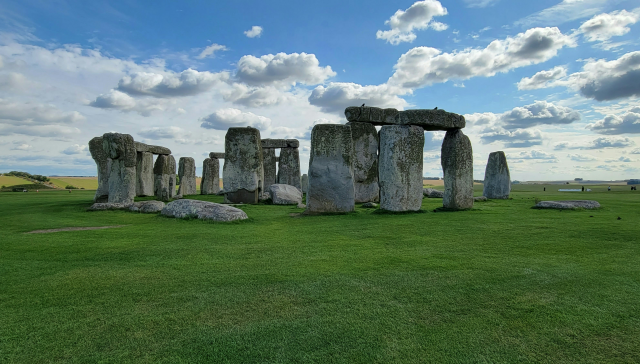
Ancient civilisations were aware of earth energies and watercourses and made the best use of them, marking them with buildings, monuments, standing stones, megaliths and other significant structures. Understanding the Earth’s frequency, these civilisations often built structures such as pyramids, sphinxes, and cathedrals on high-energy power spots.
“Wisdom begins with wonder.”—Socrates
Ley Lines
According to the Cambridge Dictionary, a ley line is “an imaginary line between some important places such as hills, believed to be where there were very old paths. Ley lines are sometimes thought to have special powers.” (1)
The concept of ley lines was first introduced in the 1920s by an English amateur archaeologist and businessman, Alfred Watkins. While travelling in rural Herefordshire, Watkins observed that many ancient features, such as standing stones, burial mounds, churches, crossroads, and beacon hills, appeared to align along remarkably straight paths on a map. He also noticed that they intersected at places he called ‘terminal points’.
Watkins coined the term ‘ley lines’ from an Old English word ‘ley’ meaning clearing or meadow. In his 1925 book The Old Straight Track (2), he suggested that these were prehistoric trade routes intentionally created by ancient Britons for navigation across forested landscapes, with straight lines representing the shortest practical path.
Watkins did not suggest that ley lines had any mystical or spiritual qualities; however, many others believe there is much more to them.
Cijeli tekst kao i drugi izvori informacija dostupni su članovima CC na Mighty Networks, privatnoj društvenoj mreži CC-a za povezivanje.
Što su mjesečne duhovne teme (MDT)?
Svakog mjeseca stvaramo nove duhovne teme. Koordinatori koriste ove teme za olakšanje diskusija kako bi članovi imali priliku govoriti o situacijama iz stvarnog života te podijeliti uvide, ideje i strategije. Duhovne teme su objavljene na internoj društvenoj platformi CC-a za povezivanje, gdje se članovi iz cijelog svijeta uključuju u razgovor i dijele osobna mišljenja. Ove teme su osmišljene da daju smjernice za diskusiju o samo-svjesnosti i duhovnom razvoju kako bi osnažile svakoga od nas da postane najbolja verzija sebe.
Ciljevi DTM
Svi smo mi na jedinstvenom putu rasta i otkrivanja većeg značenja, svrhe i životne radosti. Postizanje svega ovoga zahtijeva duboku usredotočenost na vlastito unutarnje ja. Kako je rekao Rumi, perzijski pjesnik iz 13. stoljeća, "Cijeli svemir je u tebi. Za sve pitaj sebe."
U tu svrhu, duhovne teme mjeseca su oblikovane da pomognu članovima da:
- Da bolje znaju sebe (samoostvarenje)
- Spajanje sa vlastitom unutrašnjom mudrošću
- Razvoj svjesnog fokusiranja i namjere
- Živjeti vođeni srcem
- Izraziti suosjećanje i biti na usluzi svima
- Usklađivanje sa svojim Višim/Božanskim Ja
- Manifestiranje pozitivne promjene za sebe i za kolektiv
Namjene DTM
The Monthly Spiritual Topic process was created to serve two primary objectives: To offer spiritual dialogue and education for members and to provide Coordinators with relevant topic materials to facilitate engaging member discussions. This saves time for Coordinators who no longer need to search for topics and find materials to present. It also gives Coordinators the opportunity to further develop their facilitation skills.